
The Future of FAST: More Money In, Fewer Doors Open
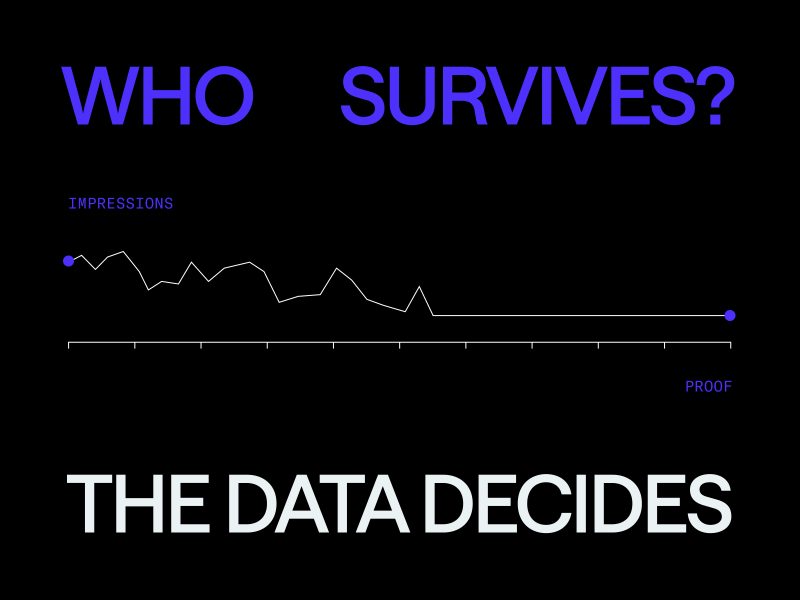
The Data That Will Decide Which Shows Survive. For two decades, marketers have chased one thing: proof. Social platforms like Meta could tell an advertiser exactly who saw an ad, how long they lingered, whether they clicked, whether they bought – and then follow that same person around the web afterward.
06.02.2026
Television could offer broad demographics and a leap of faith. That gap moved trillions of advertising dollars away from TV over the last decade.
Streaming is closing that gap, fast.
TV finally gets a receipt
Every stream now leaves a deeper footprint; what was watched, on which device, for how long. Pair that second-by-second data with household identity & user-specific profiles and advertisers can now do on a connected TV what they’ve only been able to do on social – measure deduplicated reach, tie an exposure to an actual outcome, and retarget the exact viewer later. Nielsen reports that ad-supported formats now make up roughly three-quarters of all TV viewing, and that streaming already commands about two-thirds of young-adult ad time. The audience has moved, and the data is finally catching up.
Views from the eyes of an advertiser
The new buying tools reach well past impressions. Through self-serve platforms like Roku’s Ads Manager and the addressable systems backed by the Go Addressable coalition, buyers can target down to the county level and then read real business results on the back end; site visits, leads, app installs, store traffic, even SKU-level purchases. This is only the start. User specific purchase tracking across all devices is inevitable. Soon advertisers will be able to put a 60 second ad on a home TV and know exactly how many viewers subsequently made a purchase, whether it be via mobile phone, computer, or directly from the home TV itself. Not just broad location-based results, but conversion data on a person-to-person basis.
Since the age of social media, marketers have been pushing further toward conversion-first marketing. Broad, location-oriented impressions will always have their place, but industry pressures have moved budgets toward platforms where every conversion can be tracked, and every purchaser retargeted. Home TV is not far from becoming one of those platforms.
More Money in, Fewer Channels Listed
When every impression carries a performance signal, the market turns brutally efficient. Viewership and Watch Hours will be joined by a new KPI; Conversion Rate – and inventory that proves it converts will command premium CPMs and attract more spend. On the contrary, inventory that can’t prove its worth drags pricing down for everyone around it, and the platforms know it.
That’s why FAST is shifting from “launch everything” to what is now being called a yield-management era. With well over 1,800 channels globally, executives at platforms like Tubi have openly predicted a culling – the lineup shrinking toward something closer to a thousand. More dollars in, fewer doors open.
Quality Wins, Filler Gets Cut
The shows and channels that thrive here are the ones the data flatters; strong, well-scheduled, deeply tagged content that holds the attention of purchasers with power, and moves viewers to act. They’ll earn richer ad loads, higher CPMs, and prime placement on the home screen. The losers are the thinly programmed, poorly scheduled, or near-duplicate channels that fill a grid but don’t convert. Once an advertiser can see, line by line, that a channel underperforms, the money quietly stops – and the platform eventually stops carrying it.
In a measured world, hiding within a bundle is no longer an option. You either prove you convert, or you disappear.
Sources:
nielsen.com
advertising.roku.com
epgservice.tv